Amazon Redshift
Sifflet icon

Redshift

Integrate Sifflet with Redshift to access end-to-end lineage, monitor assets like Spectrum tables, enrich metadata, and gain insights for optimized data observability.

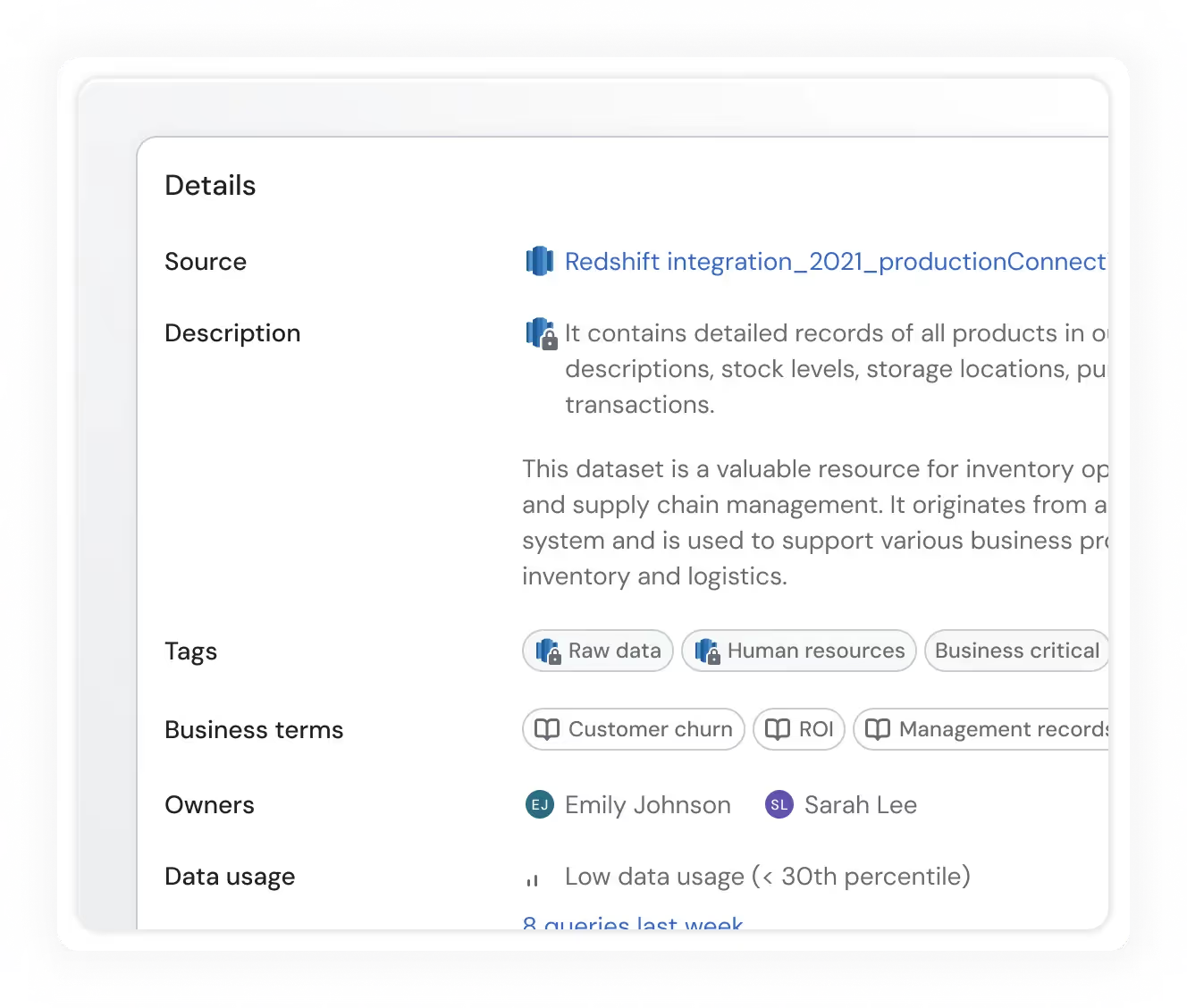
Exhaustive metadata

Sifflet leverages Redshift's internal metadata tables to retrieve information about your assets and enhance it with Sifflet-generated insights.
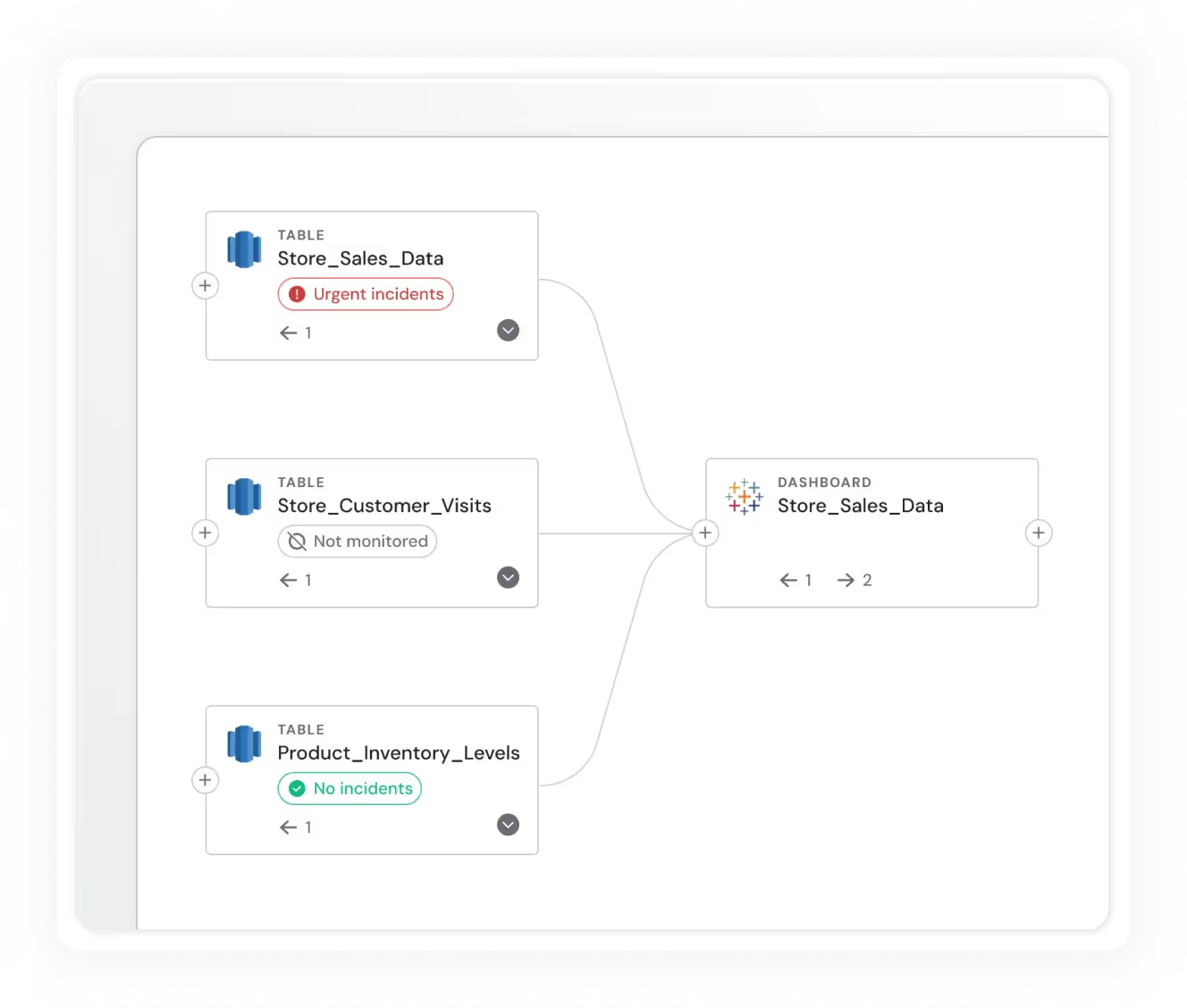
End-to-end lineage

Have a complete understanding of how data flows through your platform via end-to-end lineage for Redshift.

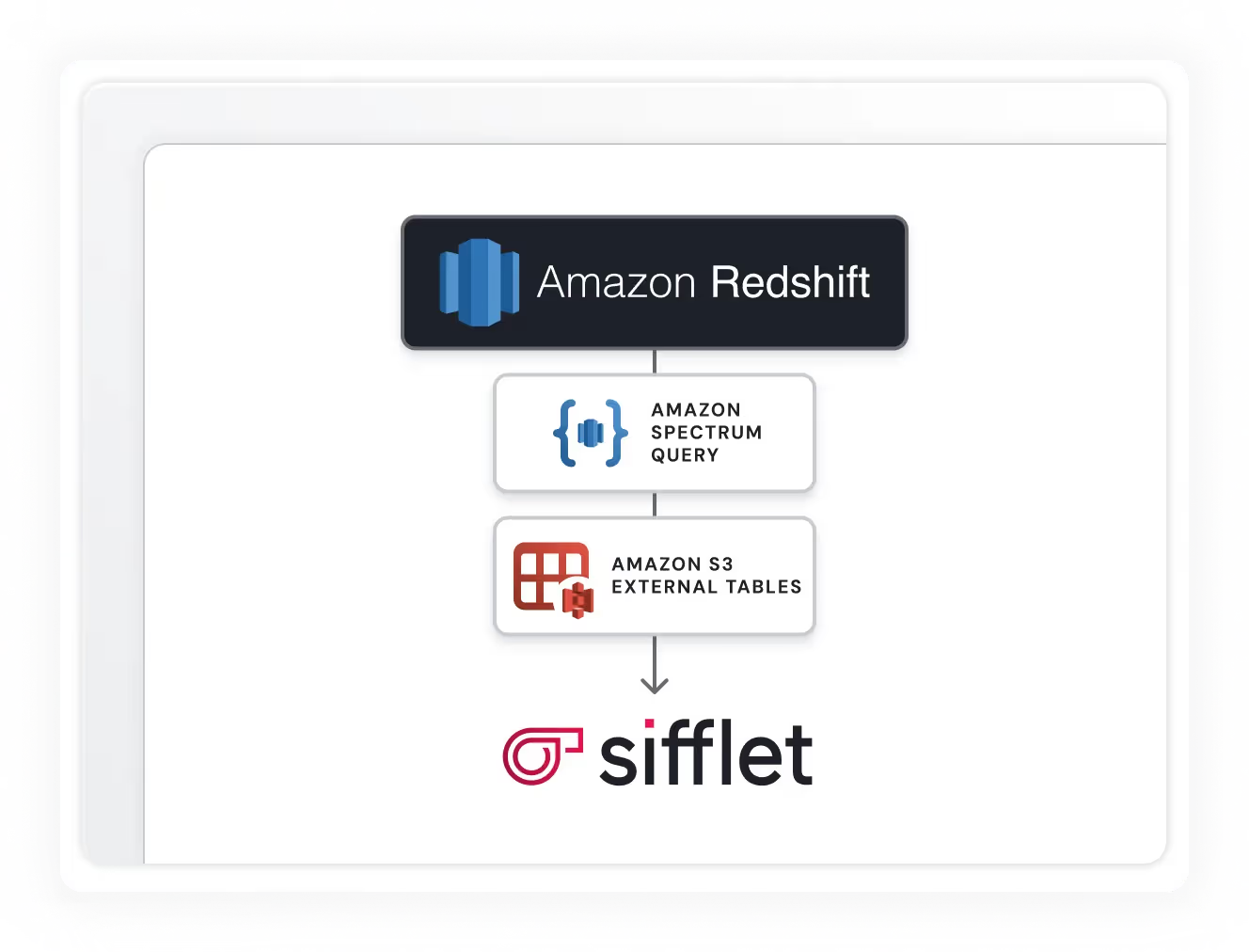
Redshift Spectrum support

Sifflet can monitor external tables via Redshift Spectrum, allowing you to ensure the quality of data stored in other systems like S3.
Sifflet’s AI Helps Us Focus on What Moves the Business

What impressed us most about Sifflet’s AI-native approach is how seamlessly it adapts to our data landscape — without needing constant tuning. The system learns patterns across our workflows and flags what matters, not just what’s noisy. It’s made our team faster and more focused, especially as we scale analytics across the business.


Simoh-Mohamed Labdoui
Head of Data

"Enabler of Cross Platform Data Storytelling"

"Sifflet has been a game-changer for our organization, providing full visibility of data lineage across multiple repositories and platforms. The ability to connect to various data sources ensures observability regardless of the platform, and the clean, intuitive UI makes setup effortless, even when uploading dbt manifest files via the API. Their documentation is concise and easy to follow, and their team's communication has been outstanding—quickly addressing issues, keeping us informed, and incorporating feedback. "

Callum O'Connor
Senior Analytics Engineer, The Adaptavist

"Building Harmony Between Data and Business With Sifflet"

"Sifflet serves as our key enabler in fostering a harmonious relationship with business teams. By proactively identifying and addressing potential issues before they escalate, we can shift the focus of our interactions from troubleshooting to driving meaningful value. This approach not only enhances collaboration but also ensures that our efforts are aligned with creating impactful outcomes for the organization."

Sophie Gallay
Data & Analytics Director, Etam

" Sifflet empowers our teams through Centralized Data Visibility"

"Having the visibility of our DBT transformations combined with full end-to-end data lineage in one central place in Sifflet is so powerful for giving our data teams confidence in our data, helping to diagnose data quality issues and unlocking an effective data mesh for us at BBC Studios"

Ross Gaskell
Software engineering manager, BBC Studios

"Sifflet allows us to find and trust our data"

"Sifflet has transformed our data observability management at Carrefour Links. Thanks to Sifflet's proactive monitoring, we can identify and resolve potential issues before they impact our operations. Additionally, the simplified access to data enables our teams to collaborate more effectively."

Mehdi Labassi
CTO, Carrefour Links

"A core component of our data strategy and transformation"

"Using Sifflet has helped us move much more quickly because we no longer experience the pain of constantly going back and fixing issues two, three, or four times."

Sami Rahman
Director of Data, Hypebeast
Still have a question in mind ?
Contact Us

Frequently asked questions
What are some best practices for ensuring data quality during transformation?
To ensure high data quality during transformation, start with strong data profiling and cleaning steps, then use mapping and validation rules to align with business logic. Incorporating data lineage tracking and anomaly detection also helps maintain integrity. Observability tools like Sifflet make it easier to enforce these practices and continuously monitor for data drift or schema changes that could affect your pipeline.
What role does Sifflet’s data catalog play in observability?
Sifflet’s data catalog acts as the central hub for your data ecosystem, enriched with metadata and classification tags. This foundation supports cloud data observability by giving teams full visibility into their assets, enabling better data lineage tracking, telemetry instrumentation, and overall observability platform performance.
What improvements has Sifflet made to incident management workflows?
We’ve introduced Augmented Resolution to help teams group related alerts into a single collaborative ticket, streamlining incident response. Plus, with integrations into your ticketing systems, Sifflet ensures that data issues are tracked, communicated, and resolved efficiently. It’s all part of our mission to boost data reliability and support your operational intelligence.
What role does data observability play in preventing freshness incidents?
Data observability gives you the visibility to detect freshness problems before they impact the business. By combining metrics like data age, expected vs. actual arrival time, and pipeline health dashboards, observability tools help teams catch delays early, trace where things broke down, and maintain trust in real-time metrics.
Which ingestion tools work best with cloud data observability platforms?
Popular ingestion tools like Fivetran, Stitch, and Apache Kafka integrate well with cloud data observability platforms. They offer strong support for telemetry instrumentation, real-time ingestion, and schema registry integration. Pairing them with observability tools ensures your data stays reliable and actionable across your entire stack.
Why is anomaly detection a standout feature for Monte Carlo?
Monte Carlo is known for its zero-config, ML-powered anomaly detection. It starts flagging issues like data drift or schema changes right out of the box, making it ideal for fast deployments. This helps teams reduce alert fatigue and stay ahead of data downtime without deep manual tuning.
Why is data quality monitoring so important for data-driven decision-making, especially in uncertain times?
Great question! Data quality monitoring helps ensure that the data you're relying on is accurate, timely and complete. In high-stress or uncertain situations, poor data can lead to poor decisions. By implementing scalable data quality monitoring, including anomaly detection and data freshness checks, you can avoid the 'garbage in, garbage out' problem and make confident, informed decisions.
What is the difference between data monitoring and data observability?
Great question! Data monitoring is like your car's dashboard—it alerts you when something goes wrong, like a failed pipeline or a missing dataset. Data observability, on the other hand, is like being the driver. It gives you a full understanding of how your data behaves, where it comes from, and how issues impact downstream systems. At Sifflet, we believe in going beyond alerts to deliver true data observability across your entire stack.

Want to try Sifflet on your Redshift Stack

Give it a try now!

I want to try